




Blog
Stay ahead with news, opinion and research from the Swarm.

Mythos found a $20,000 bug. It won’t tell you who’s already inside.
Anthropic's Mythos has dominated the security conversation this week, but the debate about whether it's overhyped is the wrong argument. The real question is simpler and more uncomfortable: if an attacker had execution inside your environment right now, would you know?

CovertSwarm launches RAID: Our red team AI division
CovertSwarm COO Luke Potter announces RAID, our Red Team AI Division, and why real adversaries made it non-negotiable.

What kills new CISOs in their first 90 days – it’s not attackers.
The pen test report. The risk register. The green dashboard. They feel like facts. They're not. They're a record of someone else's decisions, at a point in time that's already passed. And in your first 90 days as CISO, they'll shape everything you do, if you let them.
CVE-2026-33727 – When “Low Privilege” Isn’t Low Enough: A Pi-hole LPE Story
Pi-hole's pihole user is low-privileged. It's configured with nologin. It looks contained. It isn't. Here's how a writable file and a trusting root process combine into a clean privilege escalation path.

Proof of Human solves the bot problem. It doesn’t solve the people problem.
World ID can prove a real human is behind an account. It can't prove that human hasn't already been phished, vished, or bribed. The biggest breaches of the past three years didn't fake humanity, they exploited it.

Too many rules, no real test: Untangling US Cyber Disclosure
The US has no single federal data breach notification law, just a growing patchwork of SEC rules, HIPAA, state obligations, and incoming CIRCIA requirements. Most organizations have the policies. Very few have tested whether the right people can apply them under pressure.
Project Glasswing is impressive. But what about the rest?
Anthropic's Project Glasswing is a serious step forward for technical security. But it covers one third of the attack surface. Here's what it leaves out, and why that matters.
Swarm Intelligence: LiteLLM was the end of the chain, not the beginning.
LiteLLM's PyPI package was backdoored for under an hour on March 24. SSH keys, cloud credentials, and CI/CD secrets exfiltrated at install. Here is what is assessed to have happened.

Handala & MuddyWater: MDM Weaponization at Enterprise Scale
On 11 March 2026, an Iranian two-team operation destroyed 200,000 enterprise devices at Stryker without deploying a single piece of malware. One compromised Global Administrator account. One MDM console. Five hours. Swarm Brief 2602 maps the TTPs behind the Handala and MuddyWater operation and the scenario CovertSwarm would run against your environment.

Why Robbing Banks Is Easy (And Why That Should Terrify You)
A globally recognized ethical hacker shares real social engineering stories from legally robbing banks across five continents. The tools change. The human vulnerabilities don't.
Swarm Intelligence: Stryker’s Intune wipe proves your BCDR plan has a single point of failure
No malware. No ransomware. One compromised Global Admin account and the management console your IT team used this morning. The Stryker incident proves that when the management plane becomes the weapon, your BCDR plan may already have a single point of failure.

Dynamic Attack Surfaces: The Professional Sports Problem
Professional sports organizations face cybersecurity challenges that don't fit traditional frameworks. With seasonal spikes, constant third-party integrations, and workforce volatility, annual pen tests capture one snapshot while attackers exploit the gaps between assessments. Recent breaches prove why continuous offensive security is essential for dynamic environments.

Claude Jailbroken To Attack Mexican Government Agencies
A threat actor jailbroke Claude to orchestrate a month-long attack on Mexican government networks, stealing 150 GB of sensitive data. We analyze what really happened and what it means for AI-assisted cyber threats.
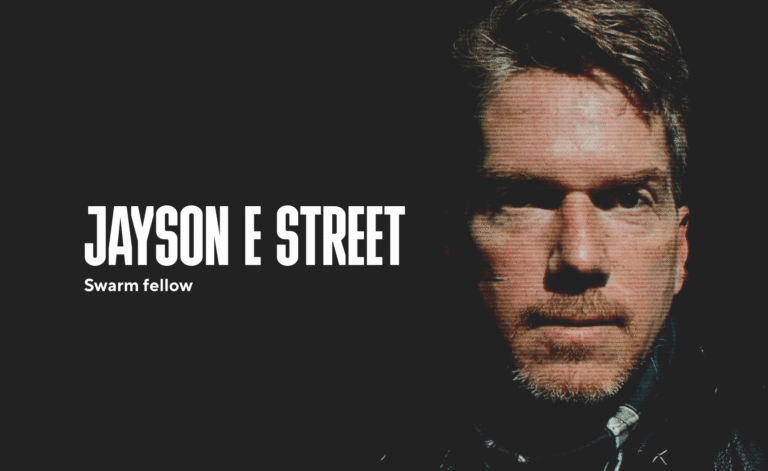
Jayson E Street Joins CovertSwarm
The man who accidentally robbed the wrong bank in Beirut is now part of the Swarm. Jayson E Street joins as Swarm Fellow to help us prove continuous offensive security is the only honest answer to how adversaries operate.
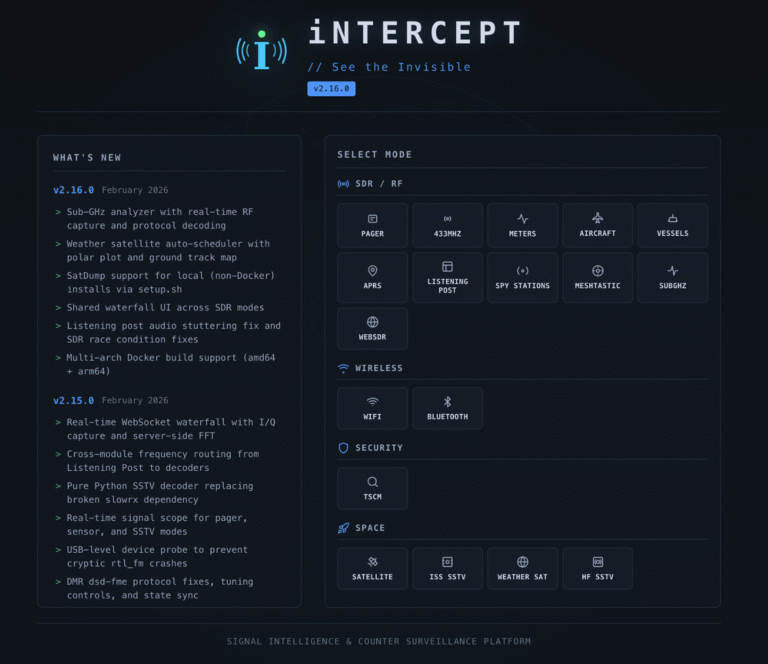
iNTERCEPT – How A Small RF Experiment Turned Into A Community SIGINT Platform
I’ve always been fascinated by RF. There’s something about the fact that it’s invisible, the fact that you might be able to hear aircraft passing overhead broadcasting their location, the fact that you might be able to pick out a…

When Your IDE Becomes An Insider: Testing Agentic Dev Tools Against Indirect Prompt Injection
Agentic development tools don't need to bypass your firewall. They're already inside. And if an attacker can control what they read, they can control what they do. We tested Google's Antigravity IDE against indirect prompt injection attacks.

What Moltbook reveals about AI agent security
The Moltbook launch exposed a critical gap: organizations deploying AI agents faster than they can secure them. Research shows 22% of enterprises currently host unauthorised AI agent deployments, with most operating undetected and holding privileged access to corporate resources, creating a new attack vector that bypasses traditional security controls.

Cloud security vulnerabilities: the unpatchable risks hiding in your SaaS stack
The cloud gives businesses scalability, agility, and built-in resilience. But it’s created a dangerous illusion: that moving workloads to SaaS platforms and managed services automatically makes them secure. Reality: the cloud doesn’t erase risk, it shifts who holds responsibility. You…

Inject one agent, own them all: The cascading risk of multi-agent AI
Ninety percent of organizations are deploying AI agents. Most aren't monitoring what they do. Multi-agent systems amplify this blindspot: one compromised agent cascades through every trusted collaborator. The architecture is scaling. The security is not.

SOC Testing: Turning Your Security Operations Centre into a Continuous Learning Engine
SOC testing isn’t just about finding vulnerabilities. It’s about building collaboration, sharpening human judgment, and turning your SOC into a continuous learning engine.

Why I founded CovertSwarm after annual pen tests failed me
Almost every business I worked for got breached. Our teams did the same thing each time: an occasional pen test, a thick report full of findings, then wait another year. Meanwhile, our attack surface changed daily. That false economy is exactly why CovertSwarm exists.

When a former UK Government cyber operations chief says AI is “limitless” in Offensive Security, we should pay attention
Jim Clover says AI has made offensive cyber "limitless." Attackers are using it now. The horse has already bolted. And if your red team isn't keeping pace, you're not testing against real threats.

What Is Constant Cyber Attack?
CovertSwarm COO Luke Potter explains why traditional testing no longer reflects how real attackers operate. In this piece, he defines Constant Cyber Attack, a discipline built on continuous, real-world emulation that helps organisations outpace genuine threats.

Threat Actors Don’t Wait For Your Annual OT Pen test
Annual OT pen tests provide snapshots. Real attackers operate continuously. This is why your operational technology security strategy needs to evolve.